
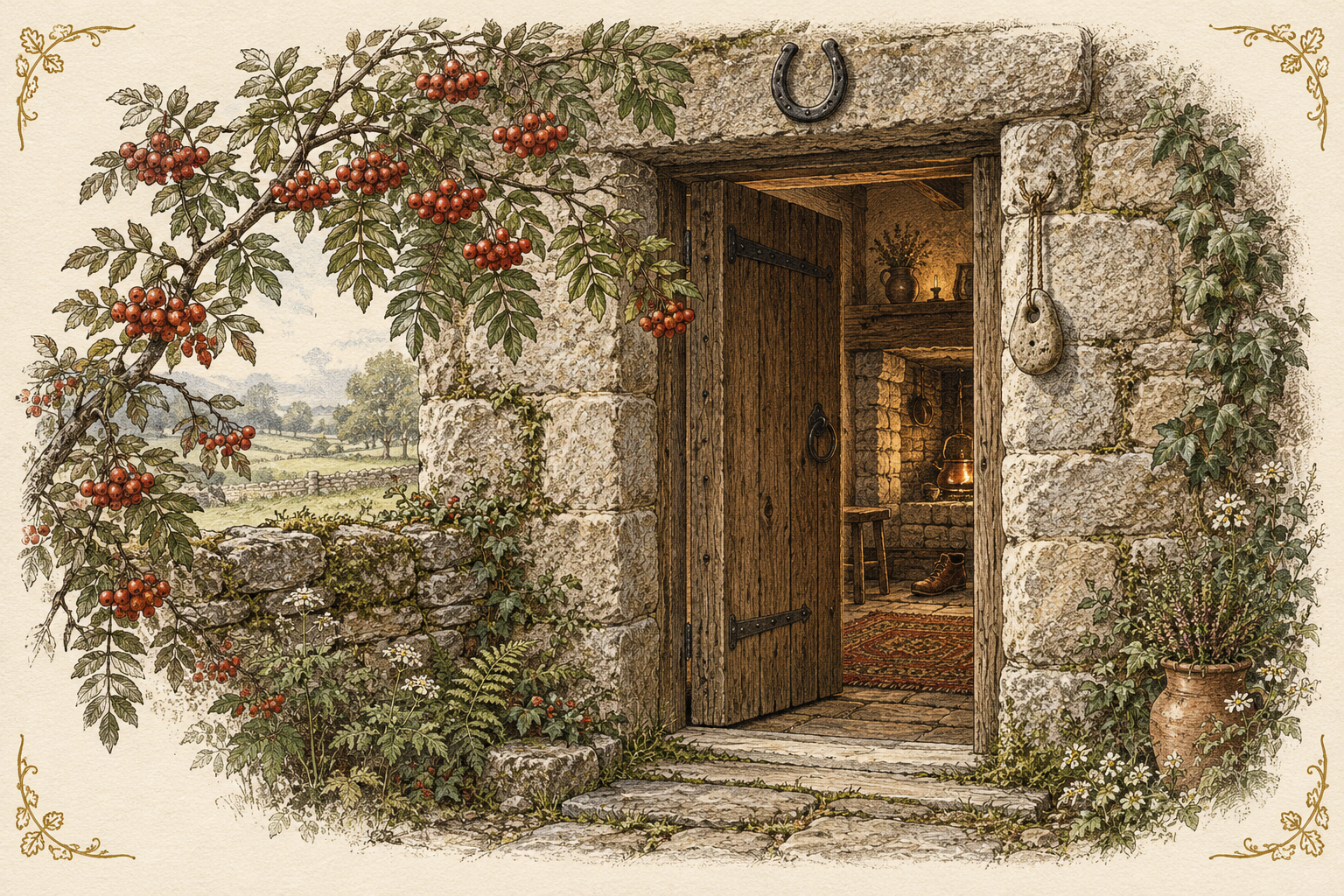
A horseshoe above the door. A worn shoe hidden beside the chimney. A little stone with a hole through its centre, hanging where someone once hoped it would keep harm away.
British homes have held many such guardians. Some remained plainly visible; others were sealed into the building and forgotten until repairs brought them to light.
They tell us something about the meaning of home: a place whose warmth, luck and inhabitants were worth protecting.
Doors, windows and hearths received particular attention. These were places where the household met the outside world - and where a charm might stand watch.
The threshold: where protection begins
The threshold marks a crossing. Beyond it lies the road, the weather, the visitor and the unknown; within it, the life of the household.
Historic England records protective marks near doors, windows and fireplaces. Their placement reflects an old concern with the openings through which unwelcome forces might enter.
A house could be guarded through its structure as well as its furnishings. A mark scratched into timber, an object concealed behind a hearth or a charm hung beside an entrance gave protection a physical place.
The details varied, but the intention is recognisable: let this be a place of shelter.
Horseshoes: iron above the door
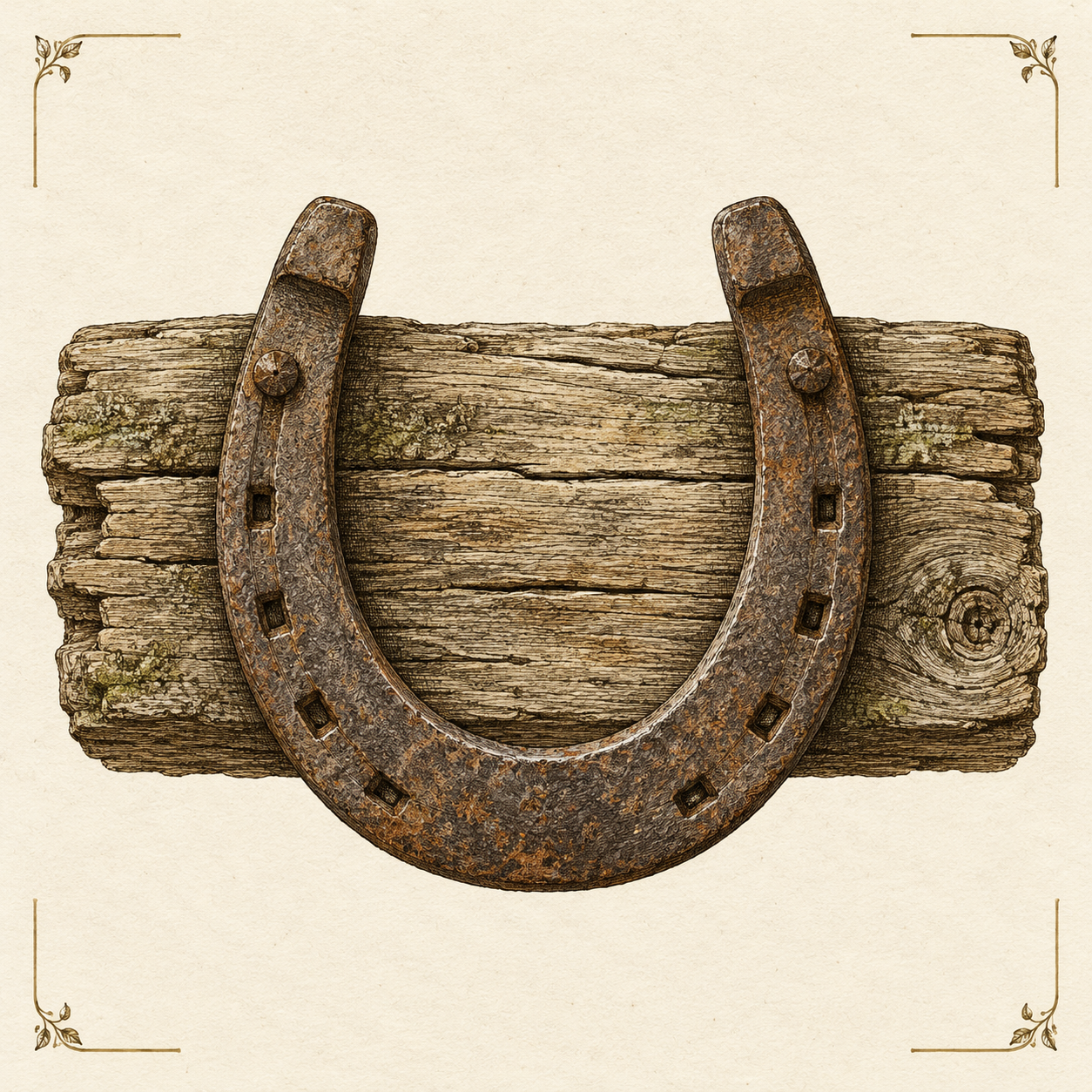
The horseshoe’s familiar association with luck has a more defensive history.
English records describe horseshoes nailed above doors to ward off witches and evil spirits. Their use against harmful witchcraft continued into the nineteenth century.
An object worn through ordinary work became a guardian of the entrance. Its position made the intention visible to everyone passing beneath it.
Today, a horseshoe can still serve as a household emblem - a small reminder of the care invested in making a home.
Hag stones: a guardian with an opening
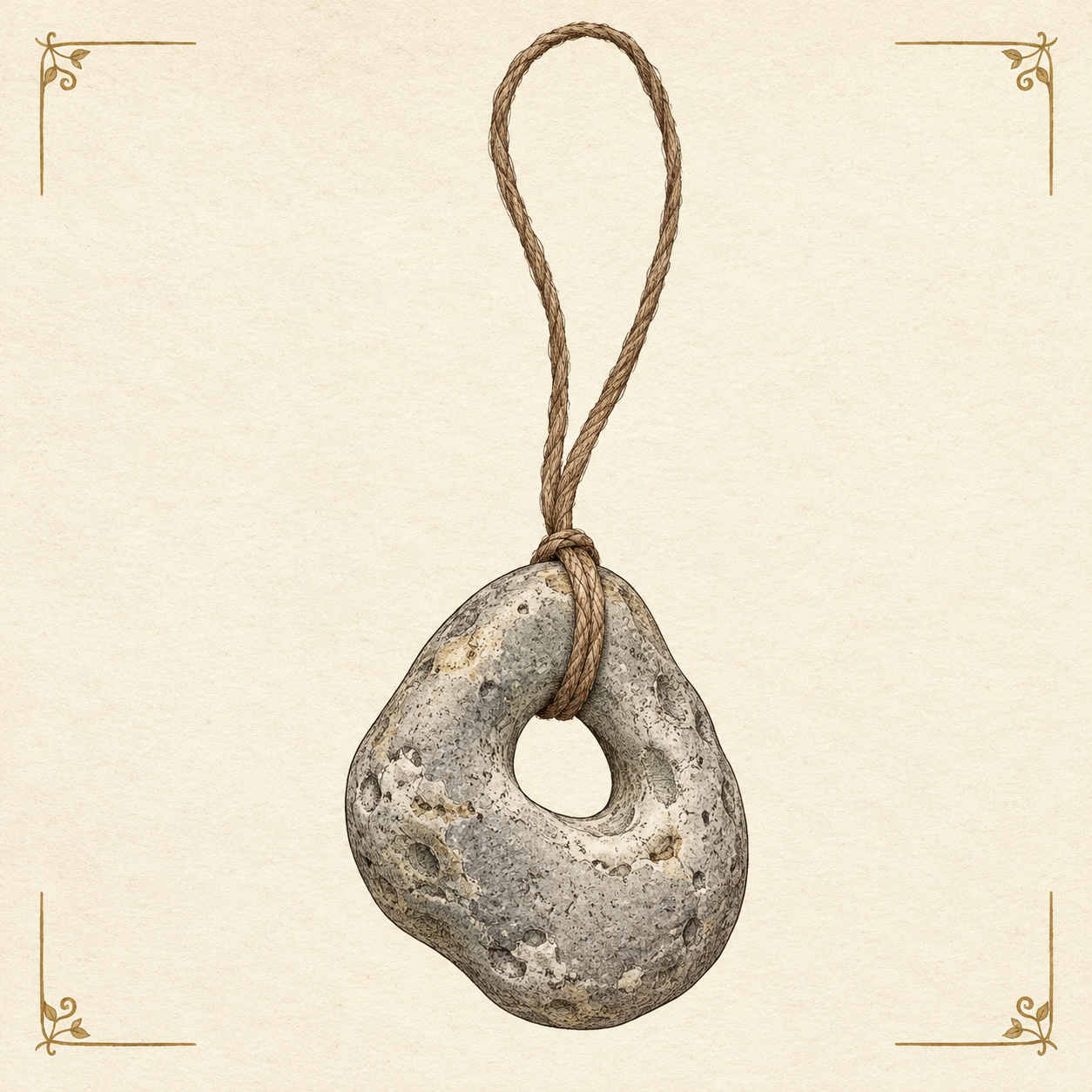
Naturally holed stones have a long place in protective folklore. Often called hag stones or witch stones, they were kept in homes and stables, and sometimes carried aboard boats.
One example in the Pitt Rivers Museum was collected from the Rushmore estate near Salisbury. Museum records describe it fixed to a cottage door to keep witches away.
Elsewhere, such stones guarded sleep. Accounts describe them hanging at the head of a bed to prevent nightmares.
The naturally formed hole made an ordinary pebble remarkable. Found on a beach or among stones, it could become something to keep, thread and hang with purpose.
Concealed shoes: the household’s hidden companions
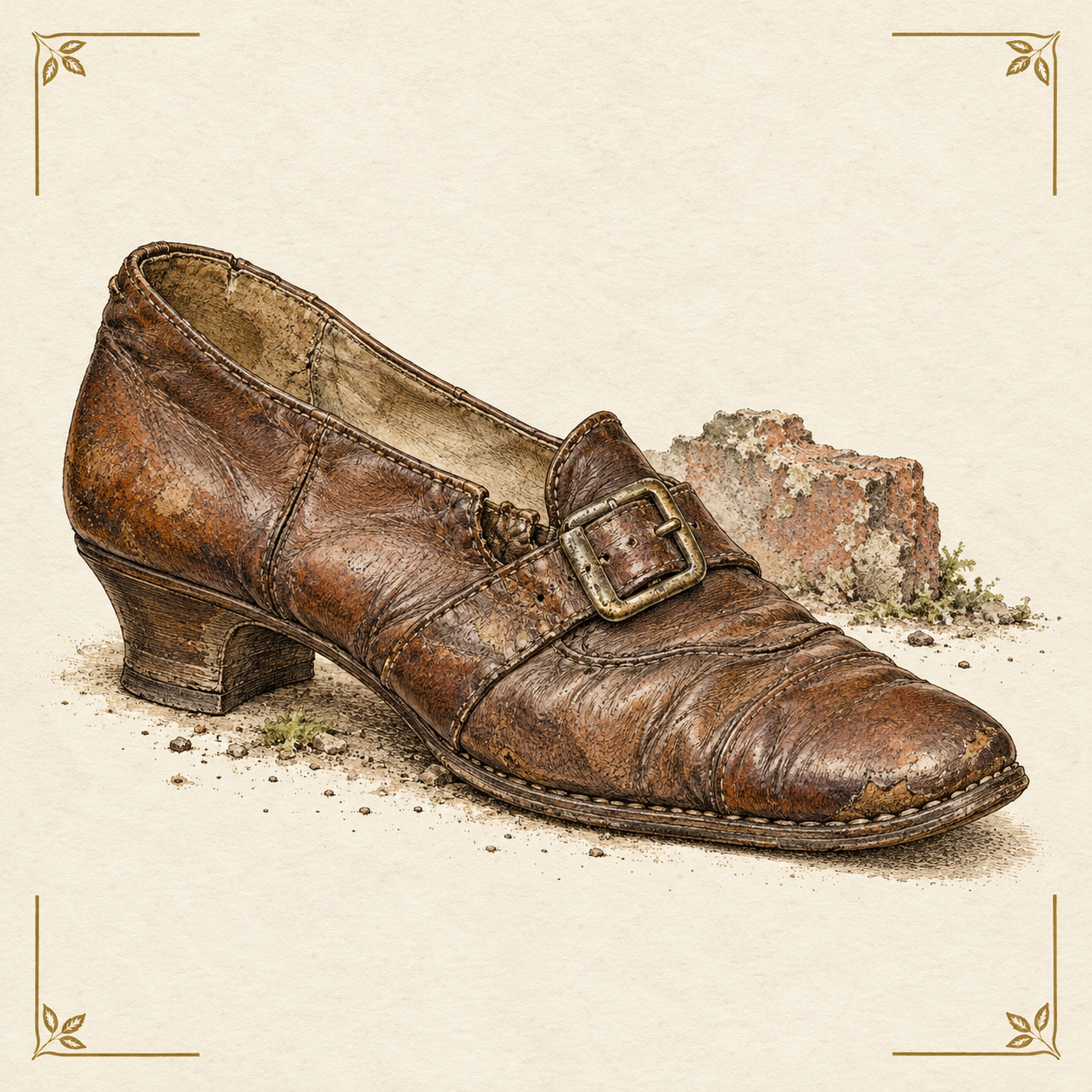
Old shoes have been discovered inside walls, beneath floors and close to fireplaces - places where their presence appears deliberate.
Their meaning remains partly mysterious. Protective magic is a leading interpretation, although few written explanations survive from the people who hid them.
Elmbridge Museum holds a child’s shoe found behind a fireplace in Esher. Its account explores the idea that footwear, shaped through wear by an individual body, could draw an unwelcome spirit towards it and hold it there.
A shoe carries the marks of a life: pressure, movement, mending and use. That intimacy gives these discoveries their particular power. Someone chose an object already closely connected with a person and placed it within the home.
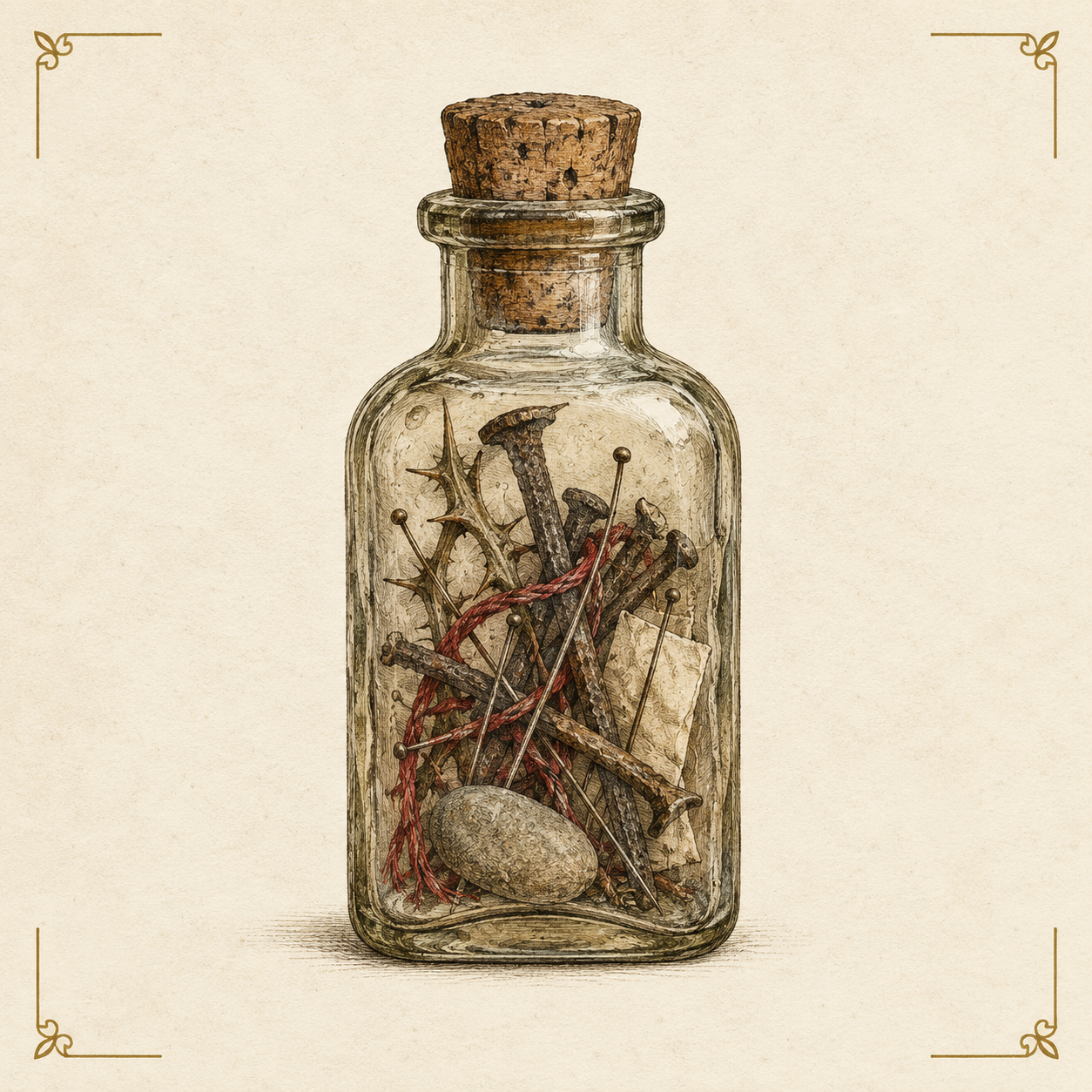
Witch bottles: protection sealed inside
Witch bottles give us a more direct glimpse of counter-magic.
Historical examples contain combinations of sharp objects and personal materials. Pins, nails, hair and urine occur in surviving bottles and accounts, although the contents were never identical in every case.
A bottle excavated at Holywell in London contained around sixty bent pins, rusty nails and a possible fragment of wood or bone. Archaeologists connected it with attempts to cause discomfort to a harmful supernatural agent.
These practices could be defensive and retaliatory at once. A bottle might be intended to interrupt an attack by turning pain back upon its supposed source.
A contemporary household bottle can take a different approach: names, thread and other chosen objects gathered around an intention of protection. That is a modern adaptation, rather than a reconstruction of the historical recipes.
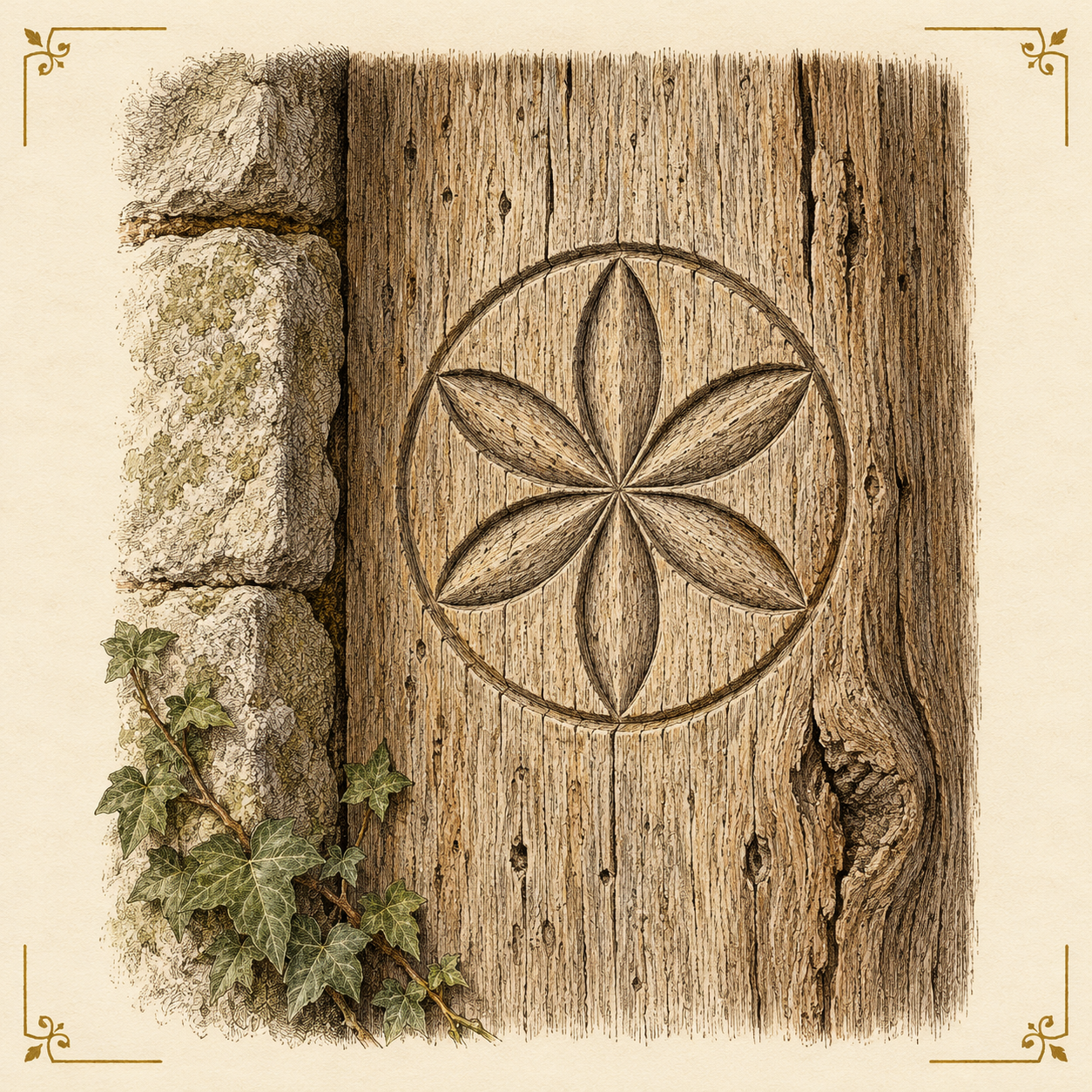
Protective marks: the flower in the timber
Among the most recognisable protective marks is the hexafoil, often called a daisy wheel.
Its six petals can be drawn with a compass inside a circle. Examples occur in historic churches, houses and other buildings, sometimes beside entrances or fireplaces.
Historic England notes that interpretation requires care. Similar designs could be decorative or geometric exercises, while their use as ritual protection marks is widely accepted in appropriate contexts.
Other marks carried Christian meanings. Overlapping Vs, for example, are often interpreted as appeals to the Virgin Mary.
Household protection could draw together prayer, familiar objects and magical action. It did not belong to one tidy system of belief.

Plants beside the entrance
The household’s guardians could also be alive.
Rowan crosses were hung at entrances, while elder trees protected livestock in Welsh tradition. St John’s wort was placed over doors and windows to drive away evil spirits.
These plants joined the building to the surrounding landscape. A branch from a tree or a flowering stem from the garden could become part of the home’s protection.
For more of these stories, read our journal article, Protective Plants in British and Irish Folklore, exploring rowan, juniper, holly, birch, elder and St John’s wort.
A threshold practice for today
A contemporary practice can begin with a simple act of care.
Clean the entrance. Choose a meaningful image or object for a place nearby. It might be a drawing of rowan, a securely displayed horseshoe or a naturally holed stone.
Pause before setting it in place. Name what you want the household to hold: peace, welcome, privacy, steadiness or rest.
You might say:
“May those who enter come in peace.
May those who dwell here find their rest.”
This is a present-day blessing inspired by the older traditions. Its meaning comes from the attention you give it and the life you want to nurture within your home.
Explore The Witch’s Threshold
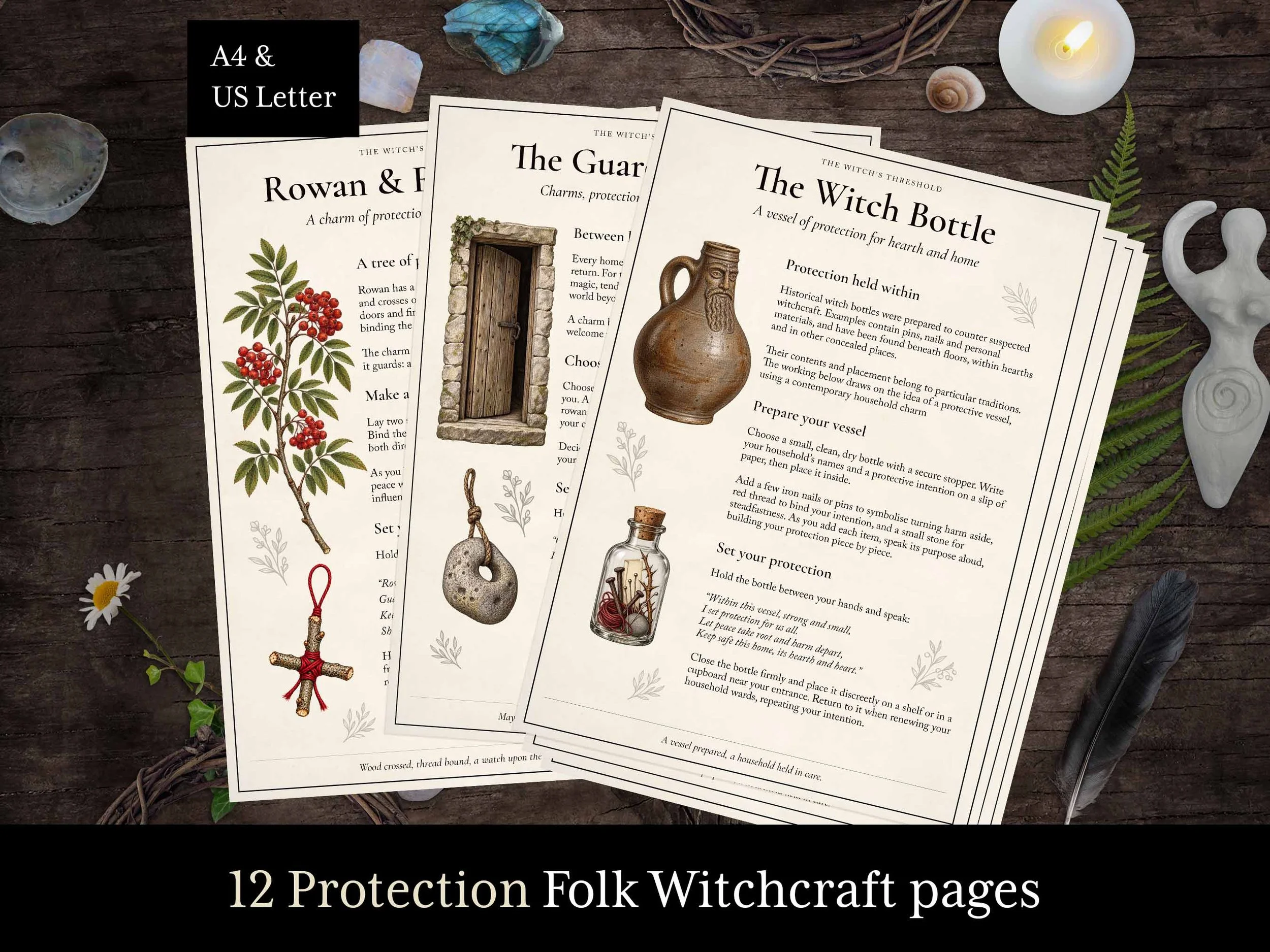
The Witch’s Threshold is a printable grimoire collection from Reliquary & Curios, bringing household protection folklore together with illustrations and contemporary practices.
Created for a personal Book of Shadows or folklore journal, the collection offers a place to explore the charms, objects and customs surrounding the guarded home.
Explore The Witch’s Threshold in the Etsy shop
For botanical companions to these household stories, discover The Lore of Protective Plants illustrated print.
Sources and further reading
• English Heritage, “Historical ways to protect against evil spirits”.
• Historic England, “What Are Witches’ Marks?”
• National Trust, “Warding off evil with witch marks”.
• Pitt Rivers Museum, “A Dorset hag stone”.
• Elmbridge Museum, “Child’s shoe”.
• Museum of London Archaeology, “The Holywell witch-bottle”.
• Roy Vickery’s Plant-Lore Archive, “Protective elder”.
