
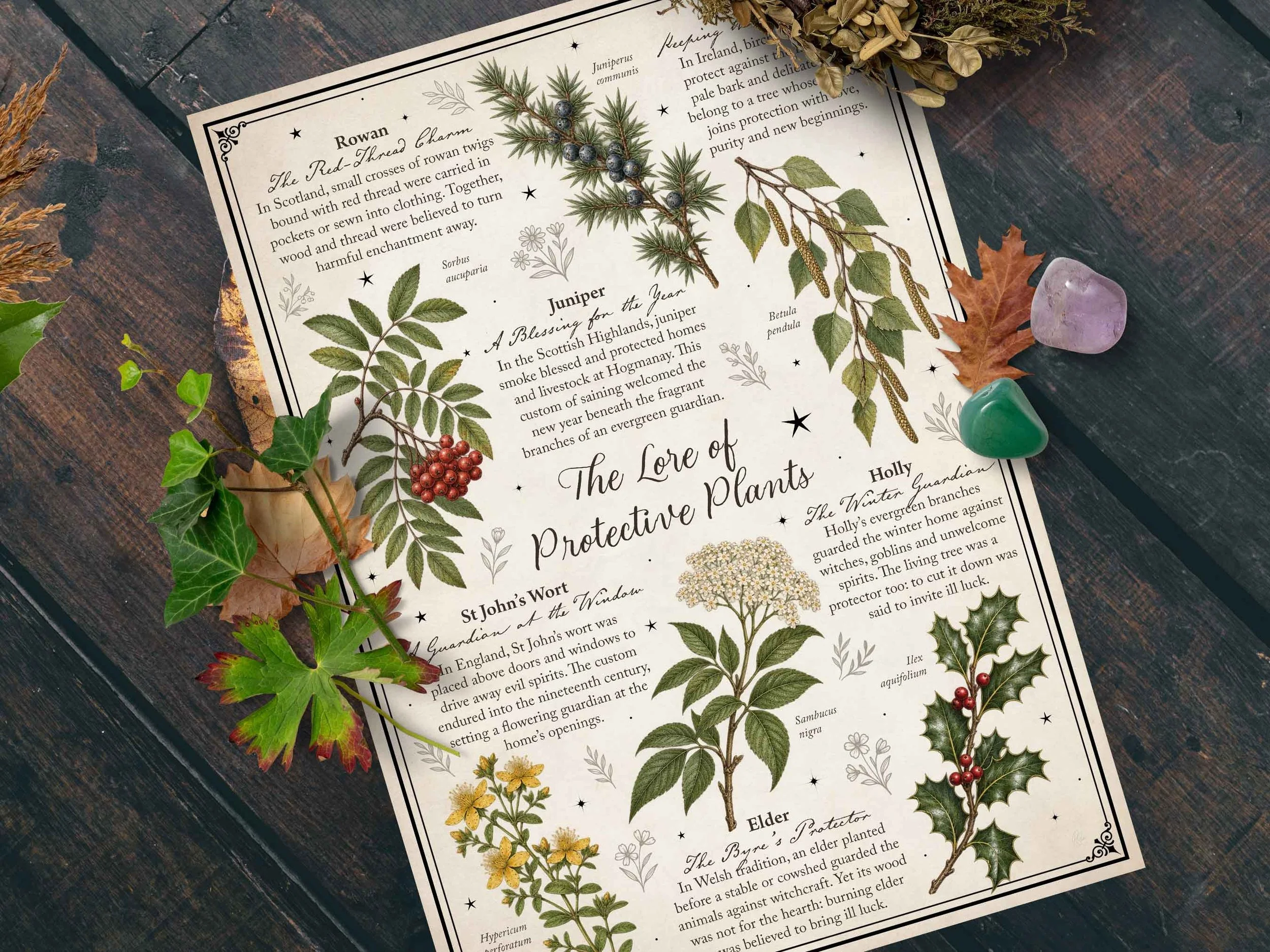
A rowan cross tucked into a coat. An elder growing beside a cowshed. A flowering herb placed above the window.
Protection in British and Irish folklore often began with something growing nearby. Trees and herbs guarded the places where people lived and worked, accompanied their animals, and offered reassurance at uncertain moments in the year.
Their uses were wonderfully particular. A certain wood, a length of red thread, a branch gathered for a seasonal custom: small details gave ordinary plants a place in the household’s defences.
These six plants appear in protective traditions recorded across Britain and Ireland. Together, they reveal a landscape in which the garden, hedgerow and woodland could all supply a guardian.
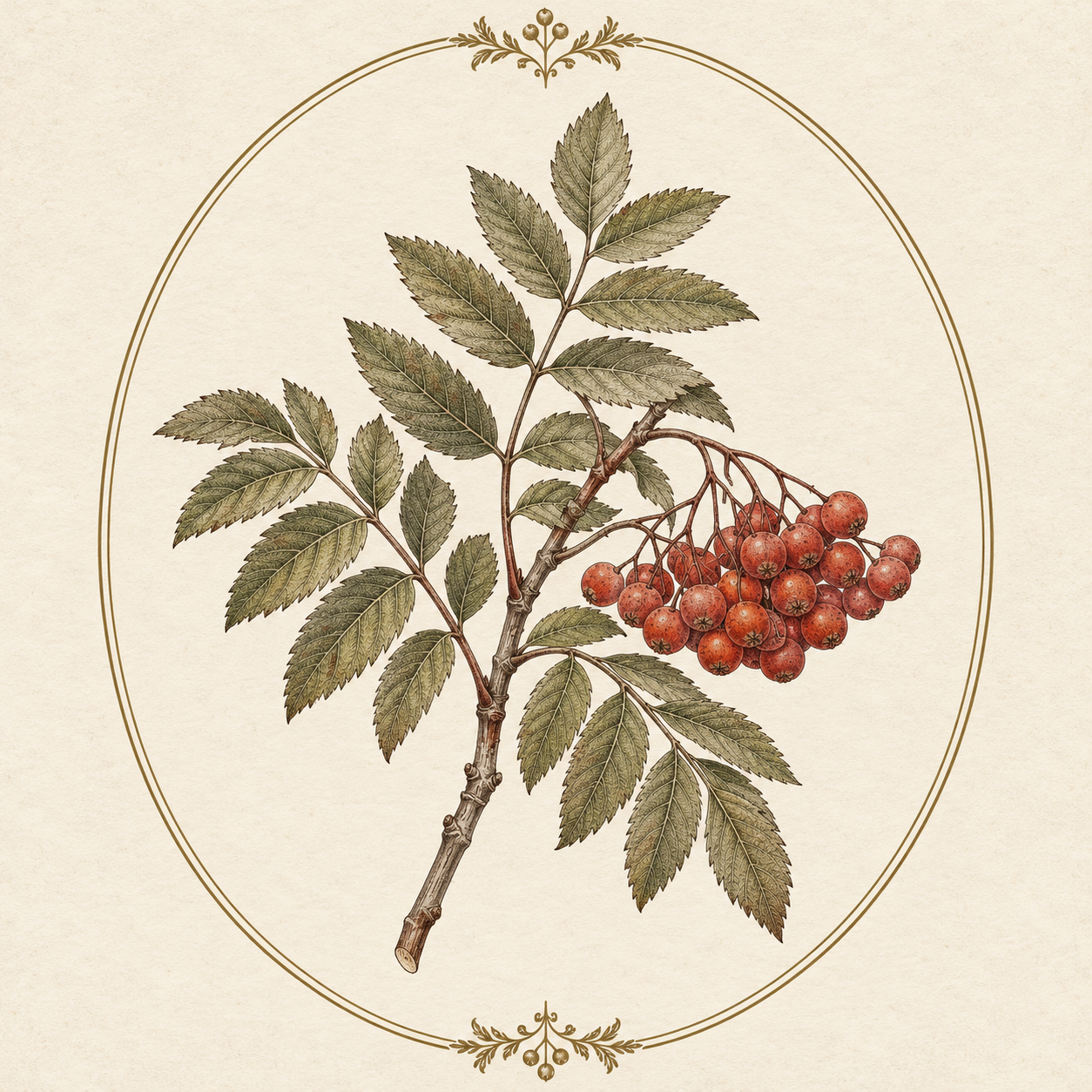
Rowan: wood and red thread
Rowan has one of the strongest protective reputations in British and Irish plant folklore.
In Scotland, small crosses made from its twigs were bound with red thread and carried in pockets or sewn into clothing. The charm kept its protection close to the wearer.
On the Isle of Man, rowan crosses were associated with May Eve. They could be worn, fastened to cattle or hung above the inside of a doorway. The same tree watched over people, animals and the entrances to their homes.
Irish records also describe rowan protecting the farm at this vulnerable point in the year. In County Galway, pieces were placed among crops on May Eve to prevent the fairies from taking their luck.
A rowan beside a house could be a living guardian; a little piece of its wood could carry that guardianship further.
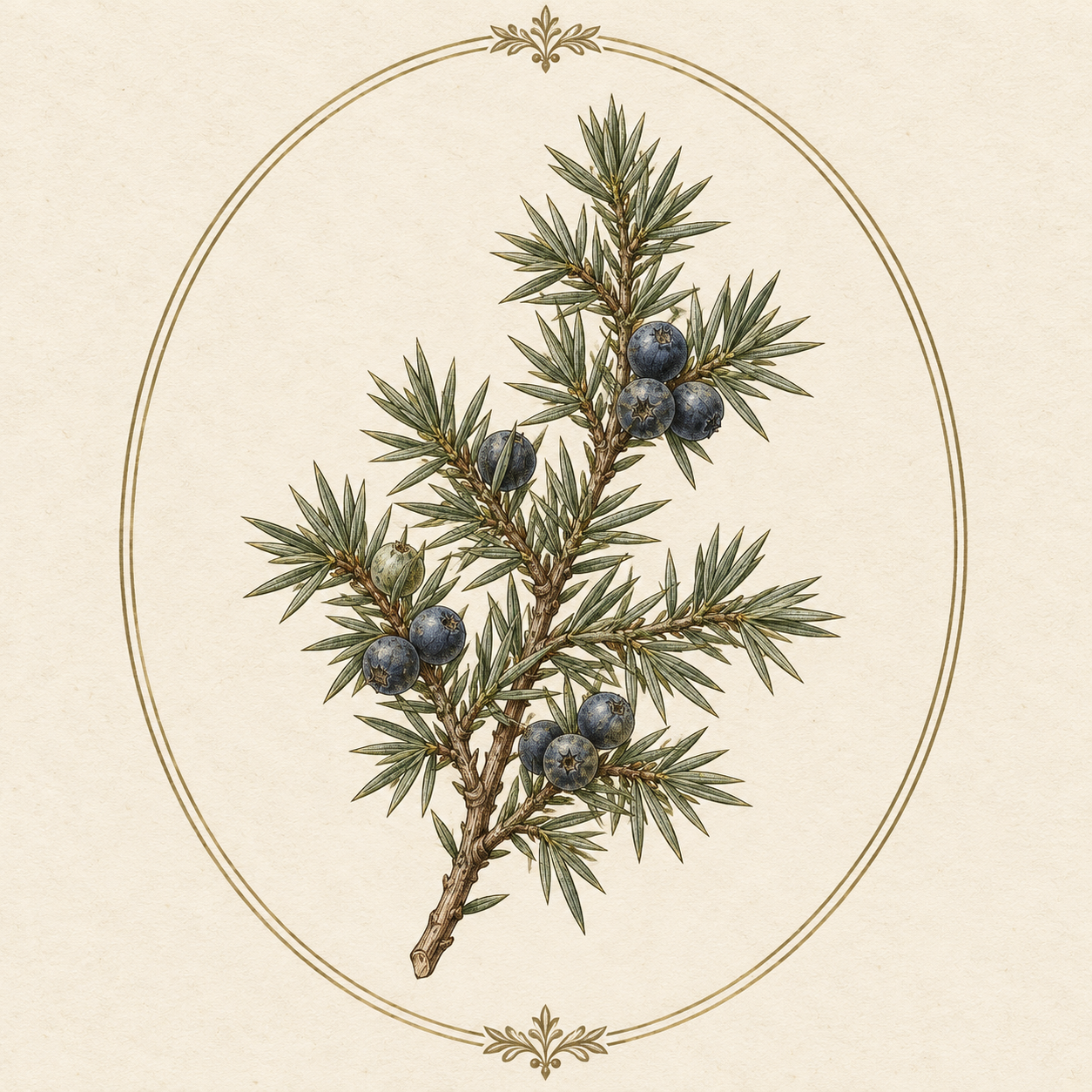
Juniper: a blessing for the new year
In the Scottish Highlands, juniper belonged to the work of blessing and protection.
At Hogmanay, its aromatic smoke was used in saining customs intended to protect households and livestock. The house was subsequently aired, and the people within returned to the business of welcoming the year.
Saining is a Scots term associated with blessing or making safe. Juniper smoke was one expression of it, within a wider body of customs.
Here, protection followed the calendar. The turn of the year called for attention to the home and everyone dependent upon it - a moment to put the old year behind and prepare for what might come.
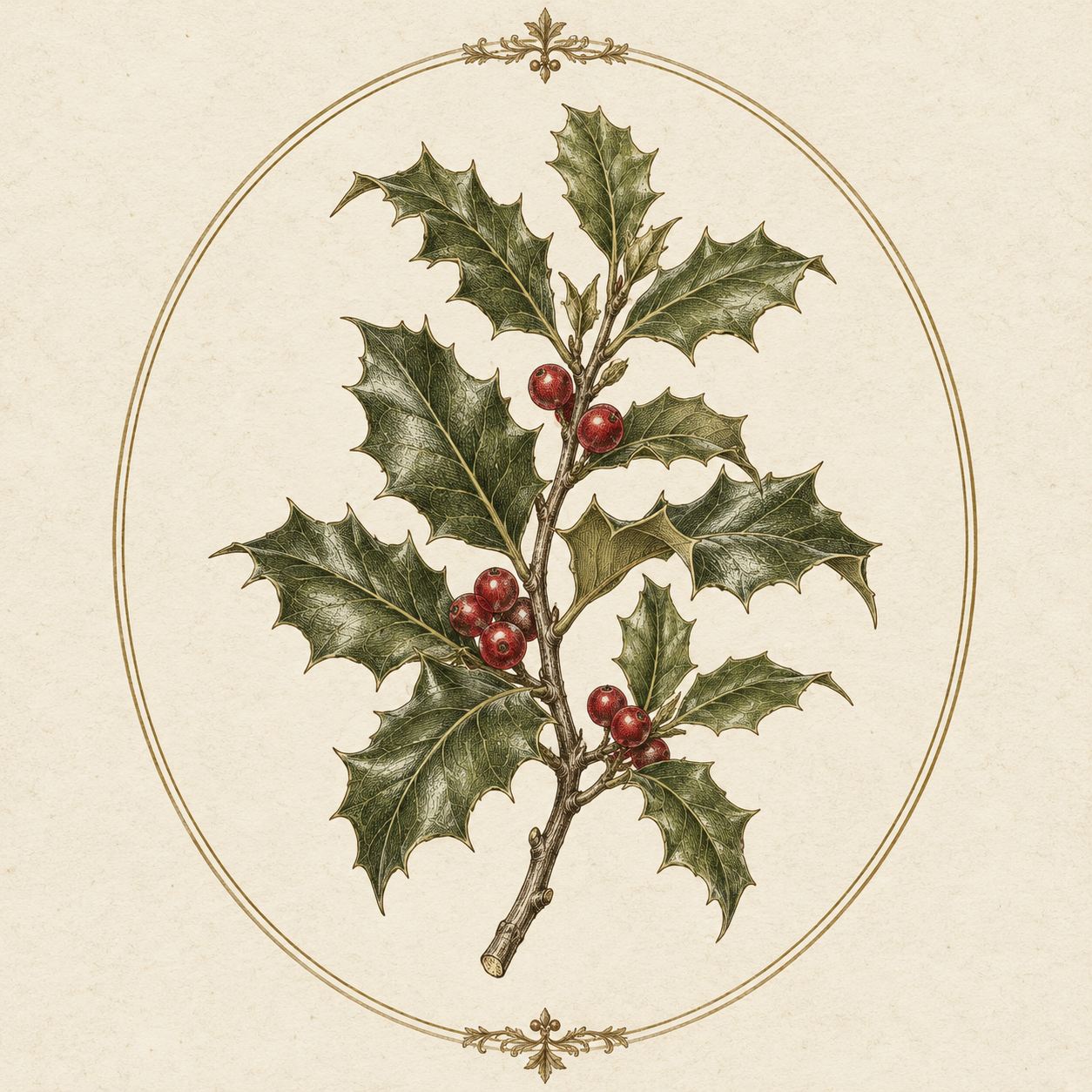
Holly: the winter guardian
Holly’s glossy leaves and red berries brought life into the winter home, but its role extended beyond decoration.
British folklore gave it a reputation as a charm against witches, goblins and the Devil. Its branches belonged among the greenery that made the house both festive and guarded.
The living tree demanded care in return. Cutting down a whole holly was widely considered unlucky.
That combination is characteristic of plant folklore: a tree might offer protection while placing obligations upon the people around it. A useful branch and a felled tree were very different things.
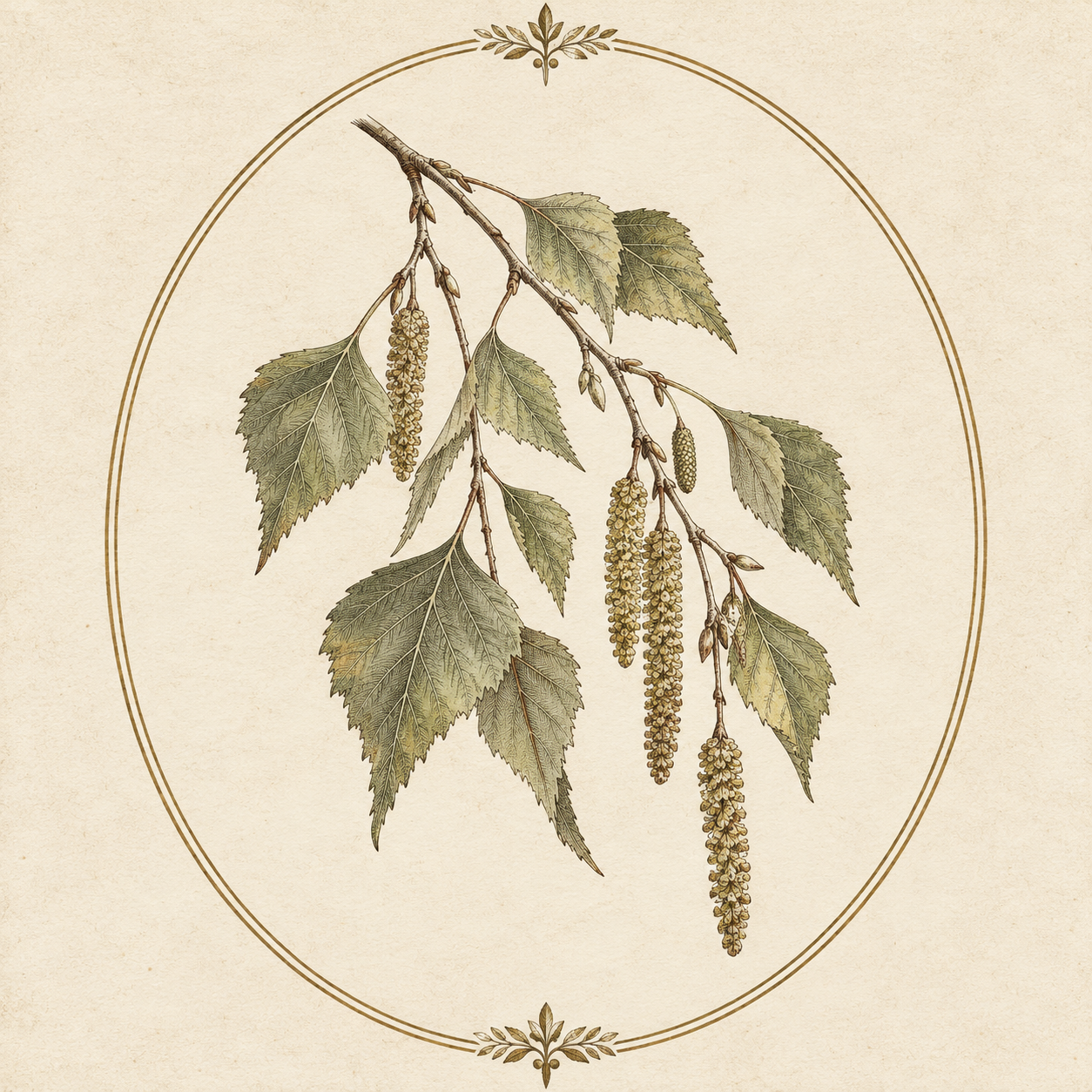
Birch: protection from the fair folk
Birch’s pale bark and delicate leaves have gathered associations with purity, love and new beginnings.
University College Cork’s account of the tree also records its use in Ireland as protection against fairies. This places it within a body of lore in which relations with the fair folk required caution.
Fairies in these traditions could be unsettling neighbours. Protection against them belonged to everyday concerns about wellbeing and misfortune.
The surviving summary gives us less detail about the precise Irish practice than we have for rowan’s red-thread charms. Birch nevertheless has a place among these protective plants, with its own gentler visual character and a reputation reaching beyond its practical uses.
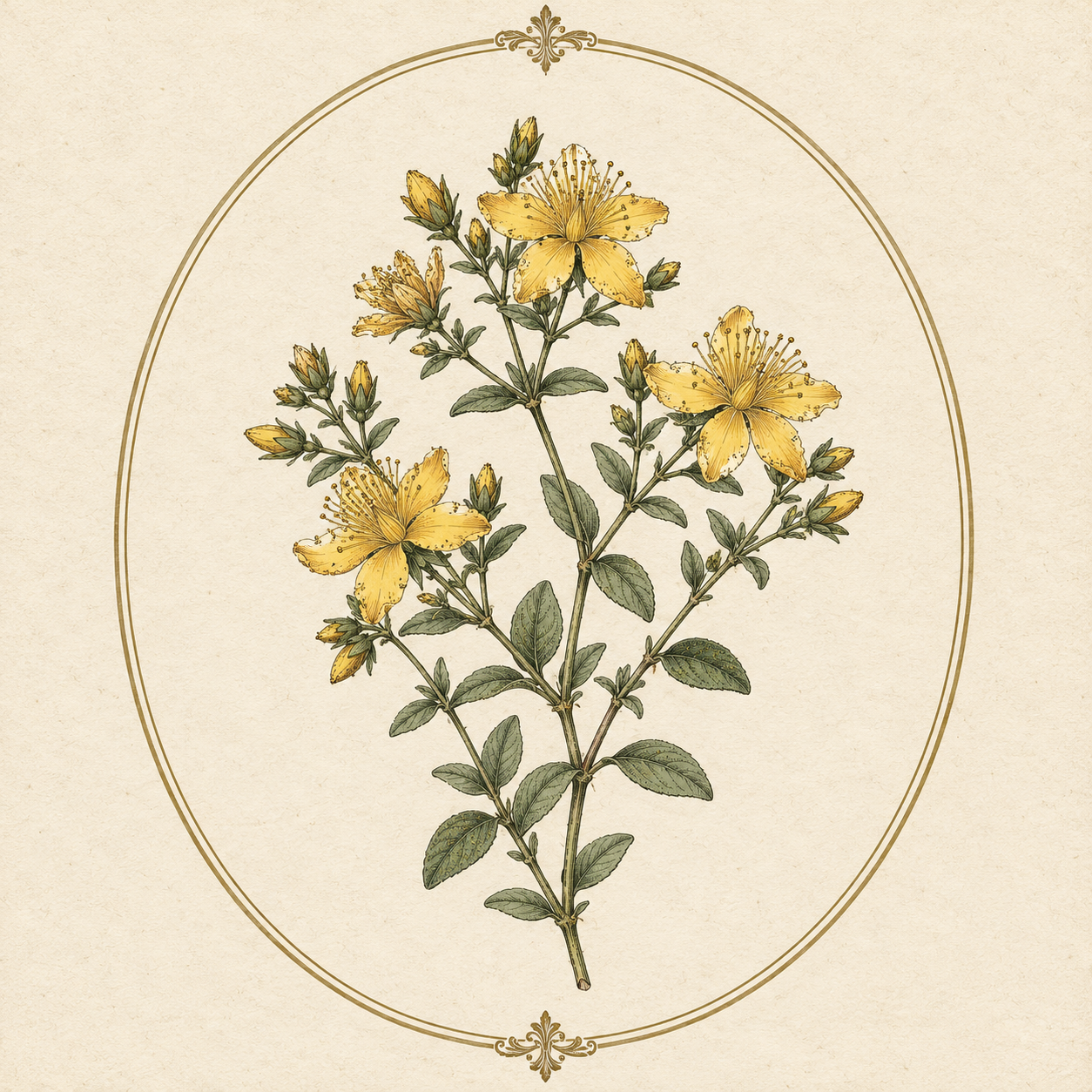
St John’s wort: guarding the openings
Doors and windows received particular attention in household protection. They were necessary openings through which people, air and light entered - and, in folk belief, unwelcome influences might enter too.
English Heritage records St John’s wort being placed above doors and windows to drive away evil spirits, a practice continuing into the nineteenth century.
Its bright flowers make an arresting image: a small golden guardian above an entrance.
For this tradition, the position matters as much as the plant. The charm belongs at the meeting point between the sheltered household and the world outside.
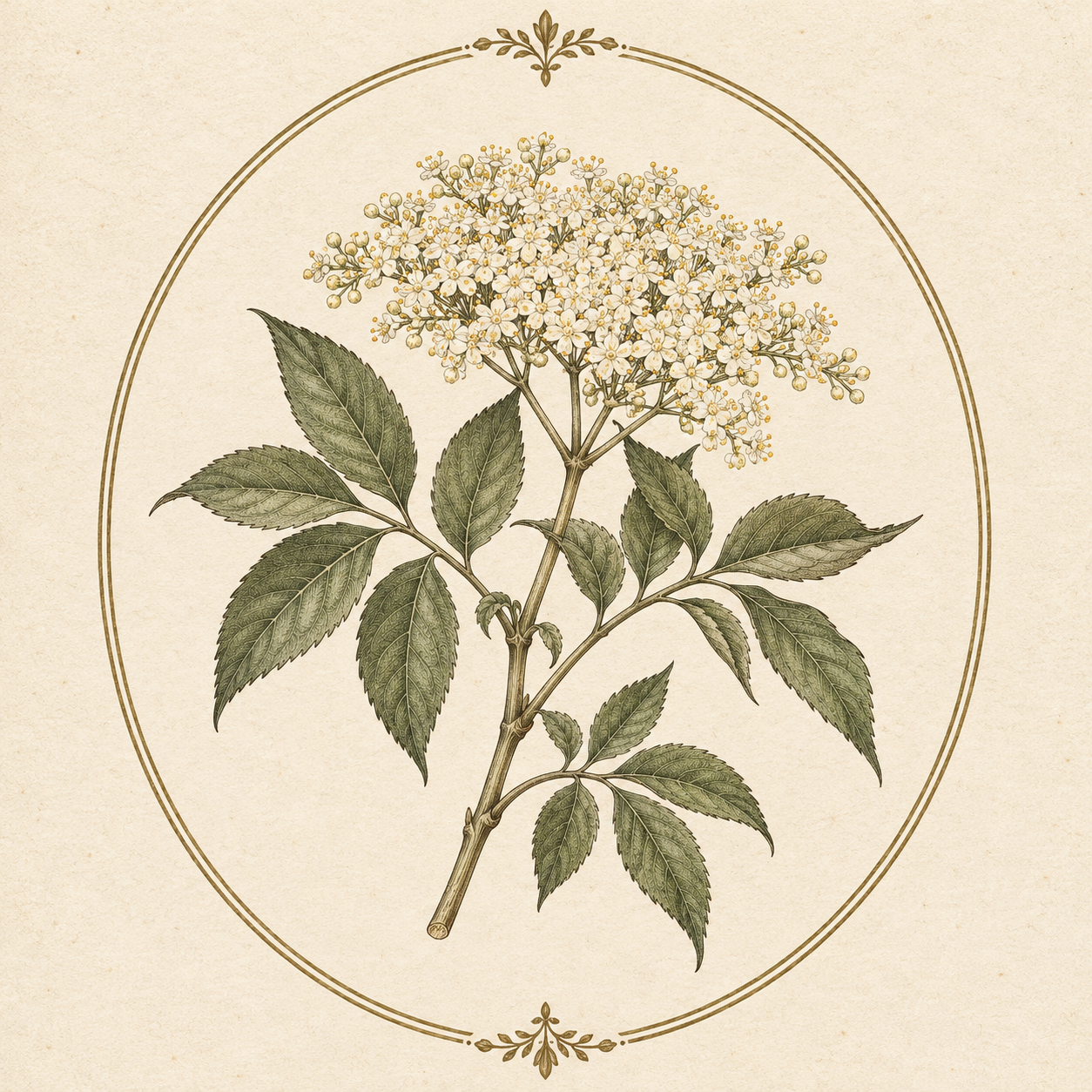
Elder: protection with conditions
Elder’s folklore is full of contradictions. It could be associated with witchcraft and also protect against it.
Welsh folklorist Marie Trevelyan recorded that an elder planted before a stable or cowshed protected the animals from witchcraft and sorcery. Elsewhere, elder grew close to homes as a guardian.
Roy Vickery’s Plant-Lore Archive records an Irish belief that an elder near the house was lucky, particularly when it had grown there of its own accord.
Yet elder was not a tree to treat carelessly. Welsh tradition warned against burning its wood, with ill luck among the feared consequences.
Its place was beside the building, alive and watchful. The protection came with a relationship to maintain.
Bringing protective plant lore into your home
These stories can give a contemporary practice both meaning and a sense of place.
A drawing of rowan beside the door might mark your intention to guard the household. Holly in a seasonal arrangement can recall its older protective reputation. An image of juniper could accompany a written blessing at the new year.
These are modern ways of responding to the folklore, rather than claims to reproduce an unchanged historical ritual.
You can work with a drawing, photograph or fallen twig. The useful question is what the plant’s story helps you express: care for your home, consideration for its occupants, or a boundary you want to keep.
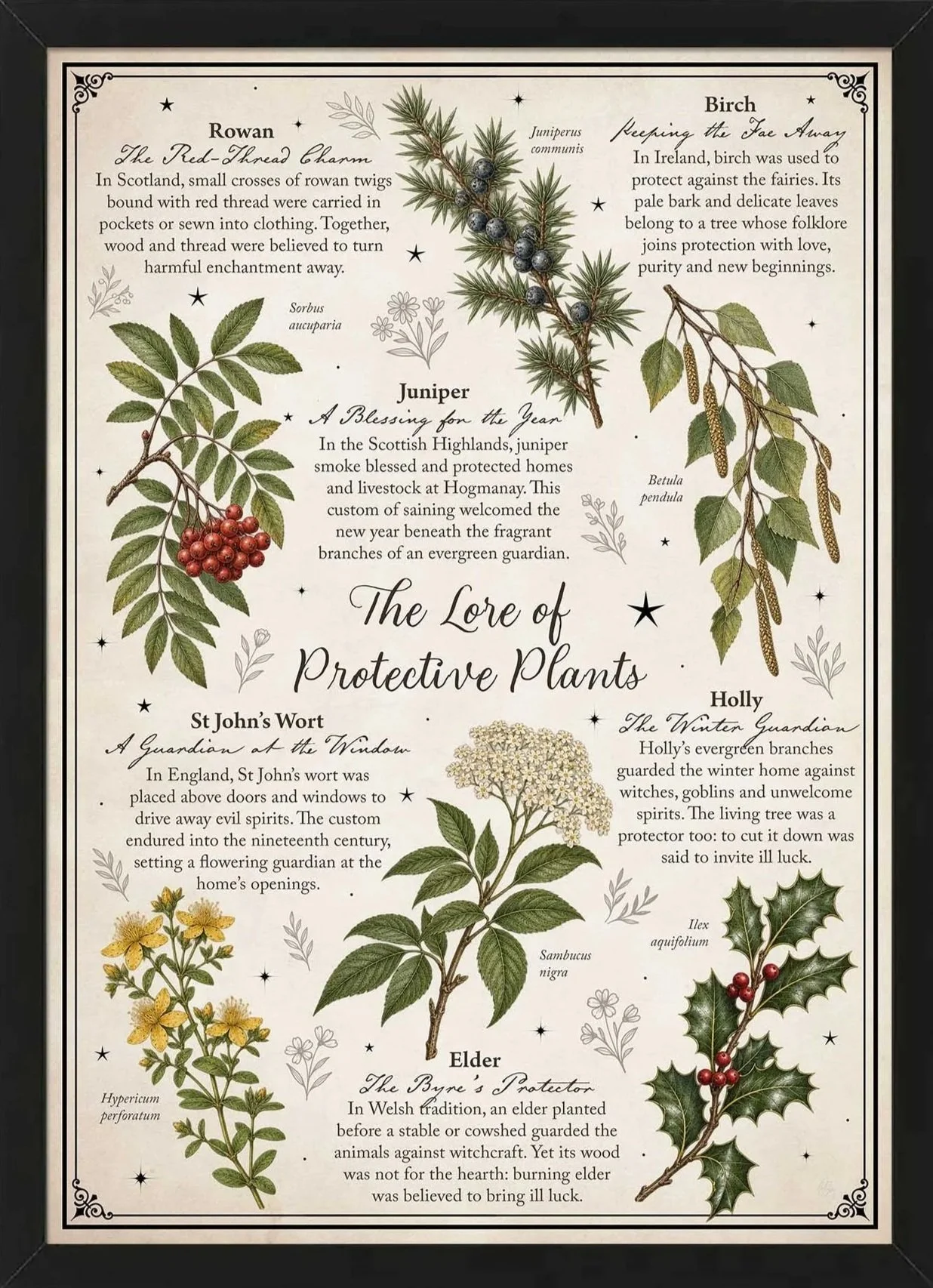
The Lore of Protective Plants
Rowan, juniper, holly, birch, St John’s wort and elder come together in The Lore of Protective Plants, an illustrated botanical print from Reliquary & Curios.
Each plant appears with its botanical name and a short account of its protective folklore - a gathering of old guardians for the wall.
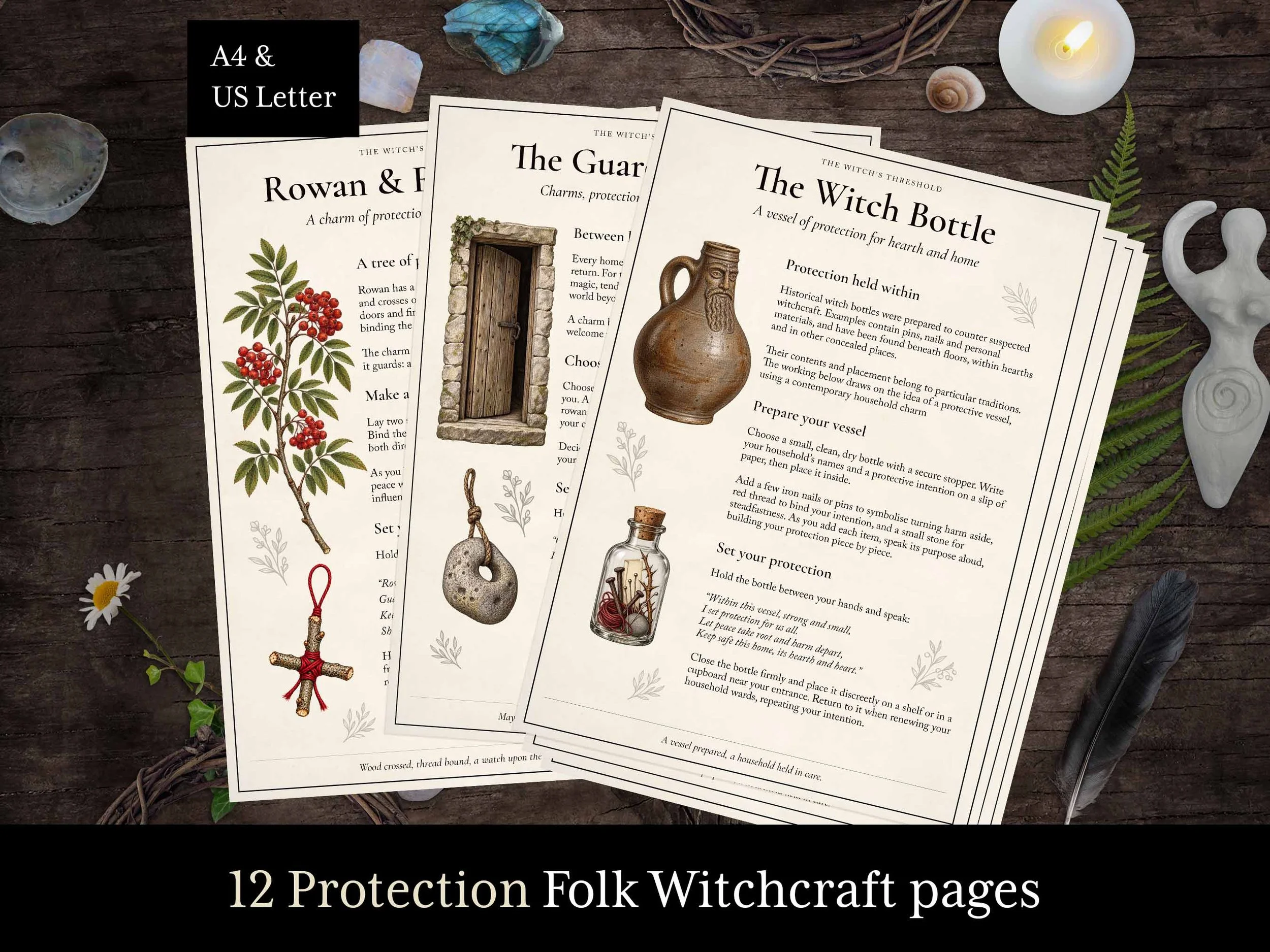
For a closer look at household protection, The Witch’s Threshold printable grimoire collection explores the charms and customs surrounding home and hearth.
Sources and further reading
• Roy Vickery’s Plant-Lore Archive, “Protective rowan” and “Protective elder”.
• Trees for Life, “Rowan mythology and folklore” and “Juniper mythology and folklore”.
• Woodland Trust, “Holly”.
• University College Cork, Tree Explorers, “Betula pendula”.
• English Heritage, “Historical ways to protect against evil spirits”.
• Marie Trevelyan, Folk-lore and Folk-stories of Wales (1909).
